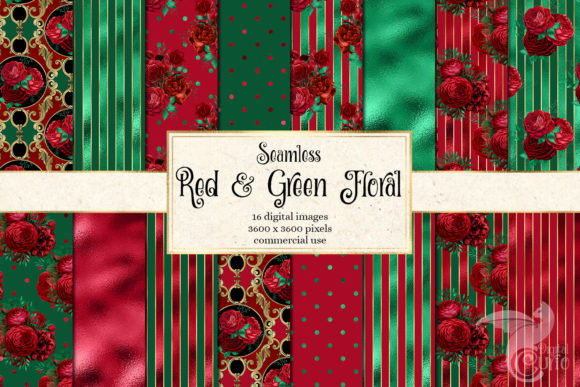
Red and Green Floral Digital Paper: A Guide to Festive Design Assets
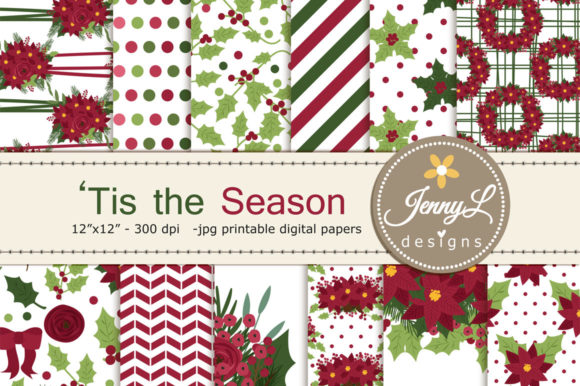
The transition into the holiday season often sparks a surge in creative projects, from crafting personalized greeting cards to designing elaborate party decor. At the heart of many of these seasonal creations lies the need for high-quality, thematic backgrounds. Red and Green Floral Digital Paper has emerged as a staple resource for designers and hobbyists alike, bridging the gap between traditional botanical aesthetics and modern digital convenience. These assets are not merely colorful backdrops; they are versatile design foundations that combine delicate flower bouquets with shimmering foil textures to evoke warmth, nostalgia, and celebration.
Understanding the specific characteristics of this digital paper collection is essential for maximizing its potential. Unlike standard solid colors or generic patterns, these lovely red, green, and gold backgrounds offer a layered visual complexity. The inclusion of metallic gold accents against deep crimson and forest green hues creates a sense of depth and luxury that flat graphics often lack. Whether you are a professional graphic designer working on a tight deadline or a scrapbooking enthusiast preserving family memories, recognizing the technical and aesthetic value of these seamless papers ensures your final output looks polished and intentional.
Technical Specifications and Print Quality
When selecting digital assets for physical production, resolution is the single most critical factor. This collection of Red and Green Floral Digital Paper is engineered specifically for high-fidelity printing. Each file boasts a resolution of 300 dpi (dots per inch), which is the industry standard for professional print quality. At lower resolutions, intricate details like petal veins or the subtle grain of foil textures can appear pixelated or muddy when printed. Maintaining 300 dpi ensures that every delicate flower bouquet remains crisp and vibrant, whether viewed up close on a wedding invitation or from a distance as wall decor.
The dimensions of these files further enhance their utility. Measuring 12 x 12 inches (3600 x 3600 pixels), they align perfectly with standard scrapbooking formats while providing ample pixel density for larger applications. This square format is particularly advantageous because it serves as a universal base size. For creators working in metric regions, the equivalent 30.5 x 30.5 cm sizing eliminates guesswork during layout planning. It is important to note that while these files are optimized for print, their high pixel count also makes them suitable for high-resolution web displays, ensuring consistency across both physical and digital mediums.
The Importance of Seamless Tiling
One of the defining features of this digital product is its seamless format. In digital design, "seamless" means that the pattern repeats perfectly without visible edges or mismatched elements when tiled. This characteristic transforms a single 12x12 image into an infinitely scalable texture. For large-format printing, such as wrapping paper, table runners, or website backgrounds, seamless tiling is non-negotiable. It allows designers to cover expansive areas without having to manually blend edges or worry about abrupt pattern breaks.
- Consistency: Ensures uniform visual flow across large surfaces.
- Efficiency: Reduces editing time by eliminating the need for manual cloning or patching.
- Versatility: Allows the same asset to be used for a small tag and a large banner simultaneously.
- Professional Finish: Prevents amateurish grid lines or misaligned motifs in final prints.
Creative Applications Across Mediums
The versatility of Red and Green Floral Digital Paper extends far beyond simple background fills. The combination of organic floral elements and structured metallic textures makes these papers adaptable to a wide array of creative scenarios. Understanding where and how to apply these assets can significantly elevate the perceived value of your projects.
Holiday Party Props and Event Decor
Event planners and DIY hosts frequently utilize these papers for cohesive party branding. Because the designs feature shimmering foil textures, they photograph exceptionally well under various lighting conditions, making them ideal for photo booth backdrops or dessert table signage. The seamless nature allows for the creation of custom bunting, cupcake toppers, and favor boxes that look professionally manufactured rather than homemade. The gold accents, in particular, catch flash photography beautifully, adding a dynamic element to event documentation.
Scrapbooking and Memory Keeping
For memory keepers, the 12x12 format is the native language of modern scrapbooking. These papers provide a rich canvas that complements rather than competes with photographs. The key to using such detailed backgrounds effectively in scrapbooking is balance. Since the Red and Green Floral Digital Paper features busy botanical motifs, it pairs best with photos that have simpler compositions or solid-colored mats. The warm color palette naturally enhances skin tones in winter photography, creating a harmonious page layout that feels timeless yet festive.
Wedding and Stationery Design
Winter weddings often incorporate deep greens and burgundies, making this digital paper collection highly relevant for matrimonial stationery. Designers can use these seamless patterns as envelope liners, menu backgrounds, or seating chart borders. The elegance of the gold foil texture adds a touch of formality appropriate for nuptials, while the floral elements soften the overall aesthetic. When designing invitations, consider using the digital paper at reduced opacity or as a border element to maintain text readability while still conveying the seasonal theme.
Evaluating Suitability for Your Project
While these backgrounds are undeniably beautiful, successful design requires matching the asset to the specific project requirements. Before incorporating Red and Green Floral Digital Paper into your workflow, consider the following practical factors to ensure optimal results.
Color Management and Calibration
Digital screens display color using light (RGB), while printers use ink (CMYK). The shimmering gold and vibrant reds in these files may appear differently on screen compared to the final print. It is advisable to perform test prints, especially when the gold foil effect is central to the design. Home inkjet printers may struggle to replicate the metallic sheen digitally represented in the JPEG, potentially rendering it as a flat mustard yellow. Professional printing services with specialty metallic inks or foiling capabilities will yield results closest to the digital preview. Always calibrate your monitor and request physical proofs for critical projects like wedding invitations.
File Format Considerations
This collection is provided in JPEG format, which offers an excellent balance between quality and file size for raster-based designs. However, users should understand the limitations of JPEGs compared to vector files. While the 300 dpi resolution is sufficient for most print tasks, JPEGs cannot be scaled up indefinitely without quality loss. If your project requires printing at billboard scale or massive architectural dimensions, you may need to supplement these papers with vector assets or accept some softening of detail. For standard consumer and prosumer applications—including all examples mentioned above—the 3600x3600 pixel JPEG specification is more than adequate.
Design Hierarchy and Readability
A common pitfall when using richly textured digital paper is sacrificing legibility. The intricate flower bouquets and foil details create significant visual noise. When overlaying text, always ensure sufficient contrast. White or cream text typically works well against the darker red and green areas, while dark green or black text may be necessary over lighter gold sections. Utilizing semi-transparent overlays or solid text boxes can help anchor typography against the busy background. Remember that the paper should support the message, not obscure it.
Maximizing Value from Digital Assets
Owning a set of 16 seamless digital papers provides substantial creative mileage, but only if organized and utilized strategically. Treat these files as a modular design system rather than isolated images. Mix and match different patterns from the collection to create depth; for example, use a darker, denser floral pattern for outer packaging and a lighter, more open bouquet design for inner cards. This variation maintains thematic consistency while preventing visual fatigue.
Furthermore, consider the longevity of these assets. While marketed for Christmas, the fundamental color palette of red, green, and gold transcends specific holidays. With careful styling, these papers can serve for autumn harvest themes, vintage Valentine’s designs, or even classic botanical illustrations year-round. By focusing on the timeless qualities of the floral and foil elements, you extend the return on investment far beyond the December rush.
Ultimately, Red and Green Floral Digital Paper represents a fusion of artistic tradition and digital efficiency. The seamless construction, high-resolution specifications, and thoughtful color blending address the practical needs of modern creators while satisfying the emotional desire for festive beauty. Whether you are producing commercial merchandise or personal heirlooms, understanding these technical and aesthetic nuances empowers you to create work that is not only visually stunning but also professionally executed. The right digital paper does more than fill space; it sets the tone, guides the eye, and elevates the entire creative endeavor.