Bringing Poppies Pattern and Floral Pattern Designs to Life Across Digital and Physical Media
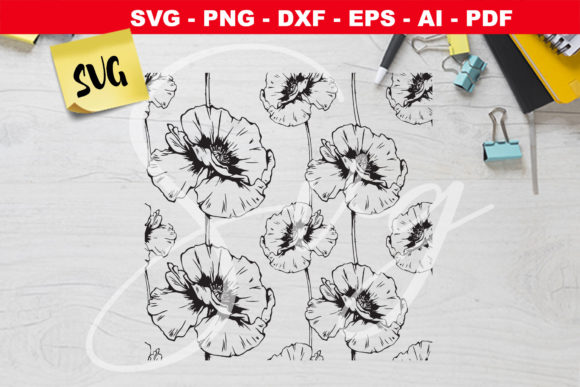
There is a distinct vibrancy to a well-executed poppies pattern that few other botanical motifs can match. Unlike generic floral designs that blend into the background, poppies command attention with their bold silhouettes and striking color contrasts. When you acquire a digital asset featuring this specific floral pattern, you are not just downloading a pretty picture; you are securing a versatile design foundation that bridges the gap between high-resolution printing and precision vector cutting. The true value lies in understanding how to leverage the specific file formats provided—SVG, AI, PDF, EPS, DXF, and PNG—to solve real creative problems across different mediums.
Navigating File Formats for Specific Machinery and Software
The inclusion of multiple file types is intentional, yet it often leads to confusion for creators who may be new to digital fabrication or professional printing. Each format serves a distinct purpose in your workflow, and choosing the right one prevents hours of troubleshooting.
SVG and DXF for Cutting Machines: If you are using a Cricut Maker, Silhouette Cameo, or Brother ScanNCut, these are your primary files. The SVG (Scalable Vector Graphics) format is generally preferred for Cricut Design Space because it retains layer information and cut lines without pixelation. DXF (Drawing Exchange Format) is the universal standard for Silhouette Studio Basic Edition users who do not have access to SVG import features. These vector paths allow your machine to distinguish between a score line, a cut line, and a print-then-cut boundary. When working with intricate poppy petals, having clean vector nodes ensures the blade doesn't snag or create jagged edges on delicate paper or vinyl.
AI and EPS for Professional Editing: For graphic designers or those creating merchandise for sale, Adobe Illustrator (AI) and Encapsulated PostScript (EPS) files are non-negotiable. These formats preserve the mathematical curves of the floral pattern, allowing you to resize the design to the size of a billboard or a business card without losing fidelity. More importantly, they allow you to manipulate individual elements. You might want to isolate a single poppy bloom for a logo, change the color palette to match a seasonal trend, or rearrange the repeat spacing for textile printing. Raster files simply cannot offer this level of structural flexibility.
PNG for Digital and Quick Print Projects: While vectors are superior for editing, the high-resolution PNG file included in this instant download is the workhorse for immediate application. It typically comes with a transparent background, making it perfect for sublimation transfers, web graphics, or digital planner stickers. If you are designing a t-shirt mockup or adding a floral accent to a Canva invitation, the PNG eliminates the need for complex software. Just ensure you verify the DPI (dots per inch) before sending it to a commercial printer; most high-quality PNGs for crafting are 300 DPI, which is the industry standard for crisp physical output.
Practical Applications in Apparel and Textile Design
The fashion and textile industry relies heavily on seamless repeats, and a poppies pattern offers a unique aesthetic advantage. Because poppies have an organic, slightly wild structure compared to cultivated roses or daisies, they lend themselves beautifully to both bohemian and modern minimalist styles. When applying this floral pattern to fabric, consider the scale relative to the garment construction.
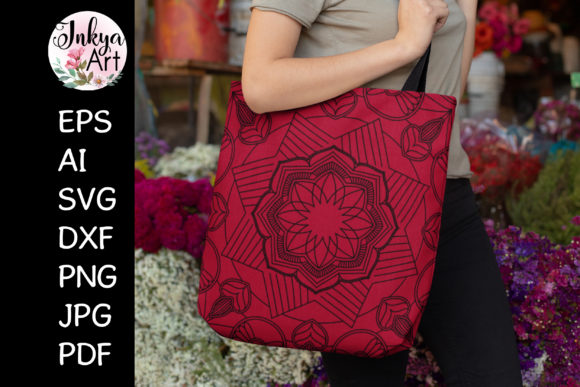
For dressmaking and sewing enthusiasts, the placement of the motif matters as much as the design itself. A large-scale poppy print requires careful pattern matching at side seams and center fronts. Using the AI or EPS file allows you to adjust the repeat size before printing yardage, ensuring the flowers don't get awkwardly chopped off at the bust line or hem. Conversely, for accessories like scrunchies, tote bags, or quilted pouches, a smaller, denser variation of the floral pattern works better to maintain visual continuity on limited surface area.
Sublimation crafters will find the PNG format particularly useful for polyester apparel. Poppies translate exceptionally well to dye-sublimation because the process favors saturated colors and high contrast. However, a practical consideration here is fabric base color. While digital screens display white as a color, sublimation printers do not print white ink. If your poppies pattern relies on white negative space for definition, you must use white or light-colored garments. Attempting this design on dark fabrics without a white underbase layer will result in ghostly, undefined flowers that lack the intended impact.
Paper Crafting and Stationery Considerations
In the realm of paper arts, the tactile nature of the material interacts directly with the visual weight of the floral pattern. Poppies are naturally associated with delicacy, making them ideal for wedding stationery, sympathy cards, and spring-themed journals. However, the technical execution varies significantly based on the chosen technique.
When using the SVG file for cardstock cutting, pay close attention to the intricacy settings. Some poppy designs feature stamen details or vein textures that are too fine for standard 65lb cardstock. In these scenarios, utilizing the "offset" feature in your cutting software can create a stabilizing border around delicate petals. Alternatively, switching to the PDF format for digital printing onto textured linen paper can evoke a vintage, hand-painted feel that vector cutting sometimes lacks. The PDF format embeds fonts and layout positioning, ensuring that if you are combining the floral pattern with typography for an invitation suite, the alignment remains locked regardless of the device used to view or print it.
Scrapbookers and journalers often face the challenge of integrating bold patterns without overwhelming photos or handwriting. Here, the ability to modify opacity or use the pattern as a masking layer becomes essential. Using the PNG in digital planning apps allows you to lower the opacity to create a subtle watermark effect, providing texture without competing with content. For physical scrapbooking, fussy-cutting individual poppies from a printed sheet (using the PNG as a guide) creates dimensional layers that add depth to flat layouts.
Commercial Use and Product Development Realities
For small business owners and Etsy sellers, this instant download represents inventory potential. However, successful product development requires more than just uploading a file to a print-on-demand service. Understanding the licensing and technical limitations of the floral pattern is crucial for avoiding customer complaints and returns.
One common pitfall in commercial product creation is ignoring color profiles. Digital files are typically RGB (Red, Green, Blue), optimized for screens. Physical printing uses CMYK (Cyan, Magenta, Yellow, Key/Black). Vibrant red poppies are notorious for shifting toward brown or orange during this conversion. Before listing products featuring this poppies pattern, always order a physical proof. Check if the supplier provides ICC profiles to soft-proof the colors on your monitor. Spending ten minutes adjusting the saturation in the AI file before production can save hundreds of dollars in wasted stock.
Additionally, consider the end-user's perspective when selling finished goods. A beautiful floral pattern on a ceramic mug needs to be dishwasher safe, which depends entirely on the coating and curing process, not just the digital file quality. When marketing items made with this design, highlight the specific attributes of the poppy motif—is it symbolic of remembrance, sleep, or summer gardens? Connecting the visual aesthetics of the pattern to emotional triggers helps differentiate your products in a saturated market. The versatility of having both vector and raster formats means you can quickly adapt the same core design for mugs, notebooks, wall art, and packaging, creating a cohesive brand identity with minimal additional design effort.
Technical Preparation Before Downloading
Since this is an instant download digital product, there is no opportunity to exchange files after purchase. Verifying compatibility beforehand is the most practical step you can take. Check your software version; older versions of Adobe Illustrator or Silhouette Studio may not support newer SVG specifications or advanced gradient meshes found in modern floral pattern designs. Similarly, confirm that your cutting machine’s firmware is up to date, as outdated firmware can misinterpret complex DXF node structures.
Storage and organization should also be part of your pre-download plan. These files, especially the high-resolution PNG and multi-layered AI files, can be substantial in size. Ensure you have adequate cloud storage or local backup solutions ready. Creating a dedicated folder structure organized by file type and project intent immediately upon download saves significant time later. Instead of a generic "Downloads" folder, consider a hierarchy like Design Assets > Floral > Poppies > Vectors. This systematic approach transforms a simple digital purchase into a long-term, accessible resource library, ensuring that whenever inspiration strikes for a new project involving this timeless floral pattern, the right tool is instantly at hand.