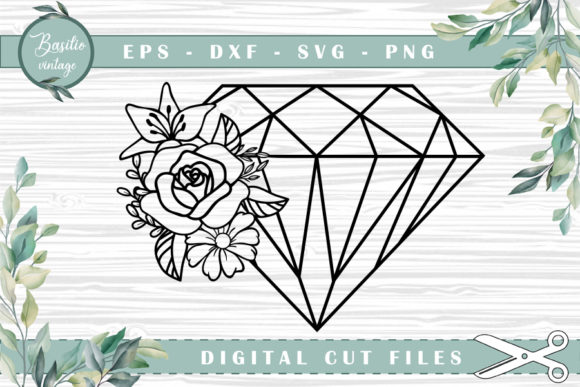
Diamond Floral Cutting Files: Strategic Asset Management for Creative Production
Integrating high-quality digital assets into a creative workflow requires more than simply downloading a design; it demands an understanding of technical specifications, application versatility, and long-term asset management. Diamond Floral Cutting Files represent a specific category of digital inventory that bridges the gap between intricate aesthetic design and practical manufacturing execution. For entrepreneurs, educators, and professional makers, these files are not merely decorative elements but foundational components of product development, branding consistency, and operational efficiency. The strategic value lies in the intersection of format versatility and resolution quality, allowing for seamless transitions between digital planning and physical production across various mediums.
Technical Specifications as Operational Infrastructure
The utility of any digital cutting file is dictated by its technical integrity. When acquiring Diamond Floral Cutting Files, the inclusion of multiple formats—SVG, PNG, DXF, and EPS—is not redundant; it is a necessary infrastructure for cross-platform compatibility. Understanding the distinct role of each file type prevents production bottlenecks and ensures output fidelity.
- SVG (Scalable Vector Graphics): This is the primary operational file for cutting software like Cricut Design Space and Silhouette Studio. Because it is vector-based, it allows for infinite scaling without pixelation, making it essential for resizing designs for different substrates, from small garment tags to large window decals.
- PNG at 300 PPI: While vectors handle cutting, high-resolution raster images handle visualization. A 300 PPI PNG ensures that mockups, client proofs, and marketing materials remain crisp. This resolution is the industry standard for print quality, ensuring that what you present digitally matches the physical outcome.
- DXF and EPS: These formats serve as universal translators for professional-grade software such as Adobe Illustrator, CorelDRAW, or Sure Cuts A Lot. They provide a safety net for users who require advanced node editing or need to integrate the floral design into complex, multi-layered compositions outside of consumer cutting ecosystems.
For decision-makers and freelancers, verifying that these files are delivered compressed in Winzip is a logistical detail with security implications. Zipped archives preserve file structure during transfer and protect against corruption. Always unzip files immediately after download to verify integrity before beginning a project. Relying on zipped files directly within cutting software often leads to parsing errors or incomplete design loading.
Strategic Application Across Mediums
The versatility of Diamond Floral Cutting Files extends their ROI beyond single-use projects. Strategic creators evaluate assets based on their adaptability across different revenue streams or educational objectives. These specific floral designs support three primary application verticals, each requiring distinct preparation and material considerations.
Vinyl and Heat Transfer Applications
Cutting this file on vinyl for iron-on applications is perhaps the most common use case, yet it requires strategic material selection. The intricacy of a "diamond floral" pattern implies detailed nodes and potentially delicate weeding areas. When planning apparel production, assess the design’s complexity against the vinyl type. Glitter or flock vinyl may obscure fine details, whereas smooth heat transfer vinyl (HTV) preserves the geometric precision of the diamond motifs. For glass pane applications, consider the viewing distance and lighting conditions. Permanent adhesive vinyl works best for static glass decor, but the design must be mirrored correctly during the cutting phase—a step easily overlooked in rushed production schedules.
Embroidery Conversion and Textile Integration
Converting cutting files for embroidery introduces a layer of technical translation. Not all SVG lines translate cleanly to stitch paths. Before committing Diamond Floral Cutting Files to digitizing software, evaluate the line weight and negative space. Successful conversion requires simplifying overly dense vector nodes into manageable stitch regions to prevent fabric puckering or thread breaks. This process transforms a 2D cutting asset into a textured textile product, effectively doubling the asset's utility. However, this should only be attempted if you possess intermediate-to-advanced digitizing skills, as poor conversion can damage both the final product and your brand reputation.
Mixed Media and Educational Use
For educators and workshop leaders, these files serve as excellent teaching tools for layering, alignment, and color theory. The geometric nature of diamond patterns combined with organic floral elements provides a balanced curriculum for students learning to merge structured and freeform design principles. In a commercial context, this duality allows for unique mixed-media products that combine cut vinyl with printed backgrounds or embroidered accents, creating premium offerings that stand out in saturated markets.
Risk Management and Quality Assurance
Acquiring digital assets involves inherent risks regarding intellectual property and technical performance. A critical aspect of using Diamond Floral Cutting Files professionally is understanding the boundaries of modification and licensing. While the files are editable, there is no guarantee of quality once they are altered, edited, or converted. This disclaimer is not merely legal boilerplate; it is a practical warning about vector integrity.
When you modify anchor points, resize disproportionately, or convert between incompatible formats, you risk introducing artifacts, open paths, or overlapping nodes that cause cutting failures. Professional users should always maintain a pristine master copy of the original unzipped files. Create working copies for experimentation and production. If a design fails after editing, revert to the master rather than attempting to patch a corrupted file. This version control practice saves hours of troubleshooting and prevents wasted materials.
Furthermore, ensure you understand the watermark policy. The preview images contain watermarks for protection, but your delivered files will be clean. Never attempt to remove watermarks from preview images for production use; this violates copyright and results in inferior quality. Always wait for the official delivery of the unzipped, watermark-free assets. Using unauthorized or altered previews undermines the professional standard of your work and exposes you to legal liability.
Workflow Integration and Decision Making
Incorporating Diamond Floral Cutting Files into a business or creative practice should be a deliberate choice aligned with broader goals. Before adding this asset to your library, conduct a brief strategic audit:
- Compatibility Check: Verify that your current software (Cricut Design Space, Silhouette Studio, Canvas, etc.) supports the provided SVG/DXF versions. Legacy software versions may struggle with newer vector standards.
- Material Inventory Alignment: Do you have the appropriate vinyl, stabilizers, or embroidery supplies to execute this specific design style? Intricate florals require sharper blades and proper mat tackiness compared to bold, simple shapes.
- Market Fit Analysis: Does the aesthetic of diamond florals align with your current brand positioning or client demographic? Trend-chasing without strategic alignment leads to inventory bloat and diluted brand identity.
- Production Capacity Assessment: Complex weeding and multi-layer assembly increase labor time. Factor this into pricing models and project timelines. A beautiful design is unprofitable if the execution time exceeds the market value.
Thoughtful use also involves recognizing when not to use a specific file. If a project requires rapid turnaround and the Diamond Floral Cutting Files demand extensive weeding or precise multi-layer registration, consider simpler alternatives. Reserve intricate assets for premium products where the added labor translates to perceived value. This discernment separates hobbyists from sustainable creative professionals.
Long-Term Value and Asset Organization
The true measure of a digital asset’s worth is its longevity and retrievability. Upon receiving your Diamond Floral Cutting Files, implement a robust organization system immediately. Rename files descriptively rather than relying on generic download names. Tag them in your digital asset management system with relevant keywords: "floral," "geometric," "vinyl," "embroidery-ready," "intricate." This metadata investment pays dividends when you need to locate specific designs months or years later.
Consider the lifecycle of the design. Floral trends evolve, but geometric-floral hybrids often retain relevance longer than purely trendy aesthetics. By maintaining high-quality masters and documenting successful material pairings or color palettes used with these files, you build a proprietary knowledge base. This institutional knowledge accelerates future production and informs new design acquisitions.
Ultimately, Diamond Floral Cutting Files are tools for execution, not just decoration. Their value is realized through intentional application, technical competence, and strategic integration into your creative ecosystem. Whether you are producing custom apparel, designing glass decor, converting for embroidery, or teaching design principles, approaching these files with professional rigor ensures consistent quality and sustainable results. Respect the technical requirements, honor the licensing terms, and leverage the format versatility to maximize both creative potential and operational efficiency.