White Flowers Insect Botanical Floral: High-Resolution Visual Assets for Professional Design
In the realm of visual communication and digital asset management, specificity is paramount. When designers, researchers, and content creators search for White Flowers Insect Botanical Floral, they are rarely looking for a generic stock photo. Instead, they are seeking a precise intersection of natural aesthetics and technical utility. This specific category of imagery bridges the gap between artistic botanical illustration and scientific documentation, serving a diverse audience ranging from packaging designers to entomologists.
The value of these assets lies not just in their subject matter, but in their technical execution. A file designated as White flowers Insect Botanical Floral JPEG, 8640 x 6480 px, 300 dpi, print ready represents a professional-grade tool. Understanding how to leverage such high-fidelity assets can significantly elevate the quality of commercial products, educational materials, and digital experiences. However, navigating the nuances of resolution, aspect ratios, and OBS preview discrepancies requires a practical understanding of digital imaging workflows.
The Intersection of Aesthetics and Scientific Accuracy
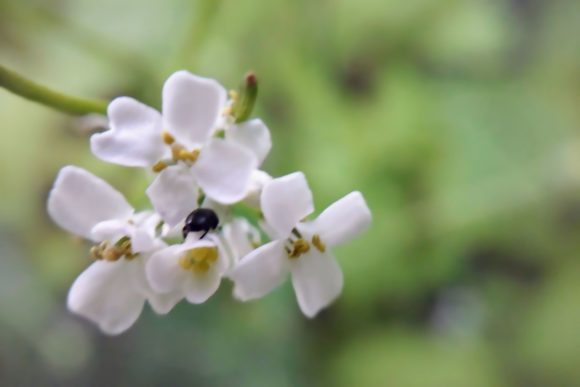
The term White Flowers Insect Botanical Floral describes more than a color palette; it defines a genre of imagery that balances beauty with biological truth. White flowers have long held symbolic significance in floral design, representing purity, simplicity, and elegance. However, when paired with insect life in a botanical context, the narrative shifts toward ecological interdependence and natural balance.
For professionals, this combination serves distinct purposes:
- Ecological Storytelling: Highlighting pollinators against white petals creates high contrast, making the insect the focal point while maintaining a soft, organic background.
- Scientific Clarity: White backgrounds or light-colored flora reduce visual noise, allowing for accurate identification of insect morphology and plant structures.
- Design Versatility: The neutrality of white flowers allows these images to integrate seamlessly into various color schemes without clashing, making them ideal for overlays and composite work.
When selecting assets within this niche, accuracy matters. A true botanical floral image should depict realistic proportions and authentic species interactions. Stylized art has its place, but for educational and high-end commercial use, photographic realism or scientifically accurate illustration provides enduring value that trends cannot diminish.
Technical Specifications: Why 8640 x 6480 px Matters
The technical descriptor JPEG, 8640 x 6480 px, 300 dpi, print ready is not merely metadata; it is a promise of versatility. For business owners and creators, understanding these numbers prevents costly production errors and ensures the asset performs across multiple mediums.
Resolution and Print Fidelity
At 8640 x 6480 pixels, this image contains over 55 megapixels of data. At the industry-standard 300 dpi (dots per inch), this translates to a physical print size of approximately 28.8 inches by 21.6 inches. This massive footprint offers several strategic advantages:
- Large Format Printing: Suitable for trade show banners, retail signage, and wall murals without pixelation.
- Cropping Freedom: Designers can isolate a single flower petal or insect wing and still retain enough resolution for standard brochure or web use.
- Future-Proofing: As display technologies advance toward 8K and beyond, ultra-high-resolution assets remain relevant longer than standard HD imagery.
It is crucial to note that while JPEG is a compressed format, a "print ready" designation at this resolution implies minimal compression artifacts. Users should always inspect the image at 100% zoom before committing to large-scale production to ensure edge sharpness meets their specific quality standards.
Navigating Aspect Ratio Discrepancies
A common point of confusion arises when the OBS Preview picture has other aspect ratio compared to the actual file. Open Broadcaster Software (OBS) and similar streaming or preview tools often crop or letterbox images to fit specific canvas sizes, typically 16:9 for video outputs. The native 8640 x 6480 resolution is a 4:3 aspect ratio.
This discrepancy does not indicate a corrupted file. Rather, it highlights the importance of distinguishing between preview environments and source files. When integrating White Flowers Insect Botanical Floral assets into video projects or streaming overlays, users must decide whether to crop the 4:3 source to fit a 16:9 frame or to use padding/backgrounds to preserve the full composition. Always trust the source file dimensions over the preview thumbnail when planning layout geometry.
Practical Applications Across Industries
The utility of high-resolution botanical insect imagery extends far beyond simple decoration. Different sectors utilize White Flowers Insect Botanical Floral assets to solve specific communication challenges.
Commercial Packaging and Branding
In the cosmetics, wellness, and organic food industries, packaging design relies heavily on botanical cues to signal natural ingredients. A 300 dpi, print-ready image allows brands to feature intricate details of white blossoms and beneficial insects directly on product labels. The high contrast of white flowers against darker text improves readability on shelves, while the presence of insects subtly communicates eco-friendly farming practices and biodiversity.
Educational and Scientific Publishing
Textbooks, field guides, and museum displays require images that withstand scrutiny. The 8640 x 6480 px resolution ensures that fine details—such as the venation on a petal or the segmentation of an antenna—remain crisp even when printed in large-format reference books. For digital education platforms, these high-res assets allow students to zoom in interactively, facilitating remote learning experiences that mimic microscope observation.
Digital Content and Web Design
While 55-megapixel files are too large for direct web use, they serve as master files for deriving optimized web assets. Creators can generate multiple variations from a single White Flowers Insect Botanical Floral source: hero banners, social media tiles, and email headers. Starting with maximum resolution ensures that every derivative maintains optimal clarity, regardless of the platform's compression algorithms.
Evaluating Suitability for Your Project
Not every project requires ultra-high-resolution botanical imagery. Before acquiring or utilizing White flowers Insect Botanical Floral JPEG, 8640 x 6480 px, 300 dpi, print ready assets, consider the following evaluation framework to ensure alignment with your goals.
Assessing Technical Requirements
Ask yourself what the final output medium demands. If you are designing a mobile app icon or a small web graphic, a 55MP file may introduce unnecessary workflow friction due to large file sizes and processing times. However, if there is any possibility of future print application or detailed cropping, the higher resolution provides essential insurance. Always verify that your hardware and software can handle large-dimension JPEGs efficiently; older systems may struggle with rendering or exporting files of this magnitude.
Considering Composition and Negative Space
High resolution does not automatically equal good design. Evaluate the composition of the White Flowers Insect Botanical Floral image critically. Does the 4:3 aspect ratio accommodate your intended layout? Is there sufficient negative space around the subject for text placement? White flowers naturally provide excellent copy space, but only if the photographer or illustrator composed the shot with design intent. Avoid images where the subject is centered without breathing room unless you plan to use it as a standalone element.
Verifying Licensing and Usage Rights
Professional-grade assets come with specific licensing terms. Ensure that the license covers your intended use case, particularly for commercial packaging or large-scale distribution. Some licenses may restrict print runs or require attribution. For business owners, securing appropriate commercial rights protects against legal exposure and supports the creators who produce these specialized botanical resources.
Best Practices for Asset Management
Working with premium botanical imagery requires disciplined file management to preserve value over time.
- Maintain Original Masters: Never overwrite the original 8640 x 6480 px file. Create working copies for editing and resizing.
- Color Profile Awareness: Verify whether the JPEG uses sRGB (for screen) or Adobe RGB/CMYK (for print). Converting between profiles incorrectly can shift the delicate whites of the flowers toward yellow or blue.
- Metadata Preservation: Keep IPTC metadata intact. Information about the plant species, insect type, and photographer embedded in the file aids in cataloging and SEO optimization for digital publications.
- Preview Generation: Create low-res proxies for team reviews and mood boards to avoid sharing massive files unnecessarily during the approval process.
Making Informed Visual Decisions
The decision to utilize White Flowers Insect Botanical Floral imagery should be driven by both aesthetic goals and technical realities. These assets represent a significant investment in visual quality, offering unparalleled detail for print and flexibility for digital adaptation. By understanding the implications of 8640 x 6480 px resolution, respecting the 4:3 aspect ratio, and acknowledging the differences between source files and OBS previews, professionals can extract maximum value from these botanical resources.
Ultimately, the power of such imagery lies in its ability to communicate complex natural relationships through a lens of refined beauty. Whether used to sell organic skincare, teach biology, or create immersive digital environments, high-quality botanical insect florals remain a cornerstone of effective visual communication. Approach these assets with technical respect and creative intention, and they will serve as reliable foundations for projects that demand excellence.