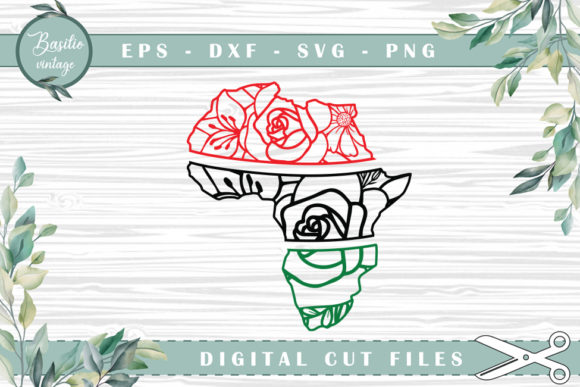
Africa Map Floral Cutting Files: A Guide to Digital Design and Craft Applications
The intersection of cultural heritage and modern crafting technology has given rise to unique digital assets that serve both artistic and commercial purposes. Among these, Africa Map Floral Cutting Files have emerged as a distinctive resource for creators looking to blend geographic symbolism with organic botanical aesthetics. These digital illustrations are more than mere decorative elements; they are versatile tools designed for precision cutting machines and embroidery setups. Understanding the technical specifications, practical applications, and inherent limitations of these files is essential for anyone intending to integrate them into vinyl projects, glass etching, or textile design.
Understanding the Digital Asset Ecosystem
When acquiring Africa map floral cutting files, users are not receiving a single static image but rather a comprehensive package of editable vector and raster formats. The value of this asset lies in its multi-format compatibility, ensuring that whether you are a hobbyist using a home cutter or a professional sign maker utilizing industrial software, the design remains crisp and scalable.
File Formats and Technical Specifications
The utility of any cutting file is dictated by its format. This specific digital collection includes several industry-standard options:
- SVG (Scalable Vector Graphics): The primary format for cutting machines like Cricut Design Space and Silhouette Studio. SVGs utilize mathematical paths rather than pixels, allowing for infinite resizing without loss of quality. This is crucial when adapting the Africa map silhouette from a small lapel pin size to a large window decal.
- PNG (Portable Network Graphics): Provided at 300 PPI (Pixels Per Inch), this high-resolution raster format is ideal for sublimation printing, digital mockups, or as a reference layer when tracing manually. Unlike web-standard images, 300 PPI ensures print-ready clarity.
- DXF (Drawing Exchange Format): Essential for users of the free version of Silhouette Studio and other CAD-based cutting software. DXF files store geometric data specifically for plotting and cutting lines.
- EPS (Encapsulated PostScript): A standard for professional graphic design software such as Adobe Illustrator or CorelDRAW. EPS allows for deep editing of anchor points and curves before exporting to a cutter.
All these formats are delivered compressed in a Winzip archive. It is a fundamental first step to unzip the folder after download; cutting software cannot read files directly from within a zipped container. Furthermore, while preview images often contain watermarks to protect intellectual property, the actual downloadable files are clean and watermark-free, ready for immediate production use.
Practical Applications Across Mediums
The versatility of Africa Map Floral Cutting Files extends across various physical mediums. The fusion of the continental outline with floral motifs creates a soft yet powerful visual narrative suitable for diverse projects.
Vinyl and Heat Transfer Projects
The most common application involves cutting adhesive vinyl or Heat Transfer Vinyl (HTV). For apparel, the intricate floral details within the map require a blade with good precision and appropriate pressure settings. When ironing onto clothing, the design serves as a statement piece for cultural appreciation events, educational conferences, or fashion lines focused on Afro-botanical themes. Because the file is vector-based, crafters can easily weed out negative space, leaving only the delicate map and flower contours on the fabric.
Glass Etching and Architectural Decor
Beyond textiles, these files are exceptionally well-suited for glass work. The organic lines of the floral elements contrast beautifully with the rigid geometry often associated with maps. Users can cut stencil vinyl to apply etching cream to glass panes, drinking glasses, or mirrors. This application transforms the digital file into permanent architectural decor. The 300 PPI PNG can also be used as a guide for sandblasting professionals who require a high-contrast template for deeper etches on commercial storefronts or interior partitions.
Embroidery Conversion
While primarily designed as cut files, the vector nature of the SVG and EPS formats makes them excellent candidates for digitizing into embroidery patterns. However, this requires an intermediate step. Cutting files consist of single-line paths, whereas embroidery requires stitch data. Creators can import the vector map into digitizing software to assign stitch types—such as satin stitches for the map borders and fill stitches for the floral interiors. This conversion process allows the design to be stitched onto denim jackets, tote bags, or caps, adding texture that vinyl cannot achieve.
Evaluating Suitability for Your Project
Before integrating Africa map floral cutting files into a workflow, it is important to assess whether the design aligns with your technical capabilities and project goals. Not every design suits every machine or material.
Machine Compatibility and Software
These files are compatible with major platforms including Cricut Design Space, Silhouette Studio, Sure Cuts A Lot, and Canvas Workspace. However, users should verify their specific software version supports SVG or DXF imports. For instance, basic editions of some software may require an upgrade to open SVG files natively, making the included DXF a necessary alternative. Professionals using Sure Cuts A Lot will appreciate the native SVG support, which preserves layer information and cut lines more reliably than converted formats.
Design Complexity and Material Choice
The "floral" aspect of this map design implies intricacy. Crafters must realistically evaluate their material choice against the design's detail level. Glitter vinyl, for example, tends to fray at tiny points and may not hold the delicate petal shapes within the map boundaries. Smooth HTV, matte adhesive vinyl, or stencil film are superior choices for preserving fine details. If the intended project requires extreme durability or very small sizing, consider simplifying the design in vector software before cutting to prevent tearing during the weeding process.
Critical Considerations and Limitations
To ensure a successful outcome, users must understand the boundaries of what is provided. Transparency regarding file integrity and modification is key to managing expectations.
The No-Guarantee Clause on Alterations
A vital stipulation accompanies these digital assets: there is no guarantee of the quality of the designs once they are altered, edited, or converted. This is standard in the digital design industry but bears emphasis. The original file has been tested and optimized for cutting. When a user modifies anchor points, changes stroke widths, or converts the file to an embroidery format, the structural integrity of the vector paths changes. Gaps may appear, nodes may overlap, or cut lines may become disjointed. Creators should always perform a test cut or stitch-out after making significant modifications to verify that the design still functions correctly.
Intellectual Property and Commercial Use
Receiving a clean, watermark-free file grants usage rights for creation, but users should always review the specific license agreement regarding commercial distribution. Typically, these files allow for the sale of finished physical products (like shirts or etched glass) but prohibit the resale or redistribution of the digital file itself. Respecting these terms ensures the sustainability of the digital art ecosystem and protects the creator's livelihood.
Best Practices for Implementation
To maximize the potential of Africa Map Floral Cutting Files, follow these operational guidelines:
- Immediate Extraction: Upon download, right-click the Winzip file and extract all contents to a dedicated project folder. Do not attempt to drag and drop individual files directly from the zip window into your software, as this often results in corrupted imports.
- Software Verification: Open the SVG first. If layers are missing or the design appears as a black box, try the DXF or EPS version. Different software engines interpret vector data differently.
- Test Cuts Are Mandatory: Before committing expensive materials, run a test cut on scrap paper or vinyl. Adjust blade depth and pressure specifically for the intricate floral sections of the map.
- Maintain Original Backups: Always keep an unaltered copy of the original downloaded files. If an edit compromises the design quality, you can revert to the source without repurchasing.
- Color Separation Planning: If creating a multi-color vinyl project, use the layers in the SVG to plan your color palette before cutting. The floral elements may be on separate layers from the map outline, facilitating easier multi-layer alignment.
Conclusion
Africa Map Floral Cutting Files represent a sophisticated category of digital crafting assets that bridge cultural expression with technical precision. By offering high-quality SVG, PNG, DXF, and EPS formats, they accommodate a wide spectrum of users from casual DIY enthusiasts to professional manufacturers. Whether applied to fashion via heat transfer, to architecture via glass etching, or to textiles via embroidery conversion, the design offers profound creative flexibility. Success, however, depends on respecting the technical requirements of the file formats, understanding the limitations regarding post-edit quality, and selecting appropriate materials for the design’s complexity. With proper handling and realistic expectations, these digital illustrations serve as a reliable foundation for meaningful and visually striking creative projects.